Healthcare washrooms and clinical spaces must meet some of the most demanding requirements in the built environment. They are used continuously, cleaned frequently, and must support infection control, accessibility, and safe maintenance at all times.
Designers and estates teams work within a complex framework of guidance, including Health Building Notes such as HBN 00-10 and HBN 00-02, infection prevention and control standards, Approved Document M, and BS 8300. These documents set out clear expectations for hygiene, inclusive access, and long-term performance.
Managing services with IPS panelling
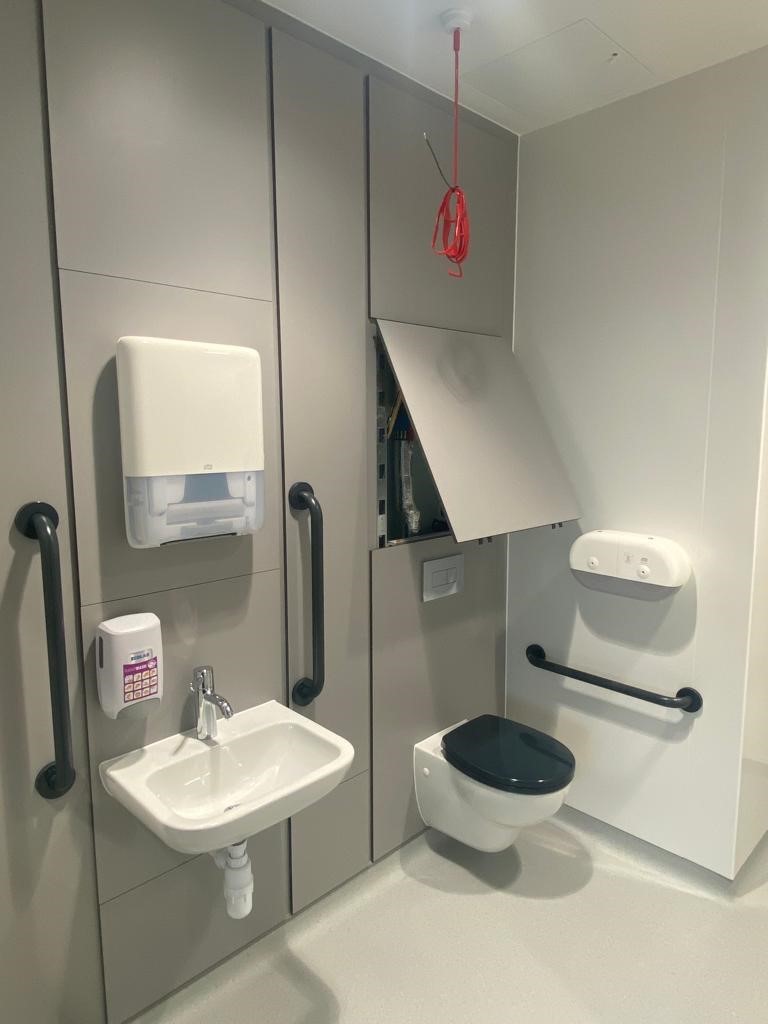
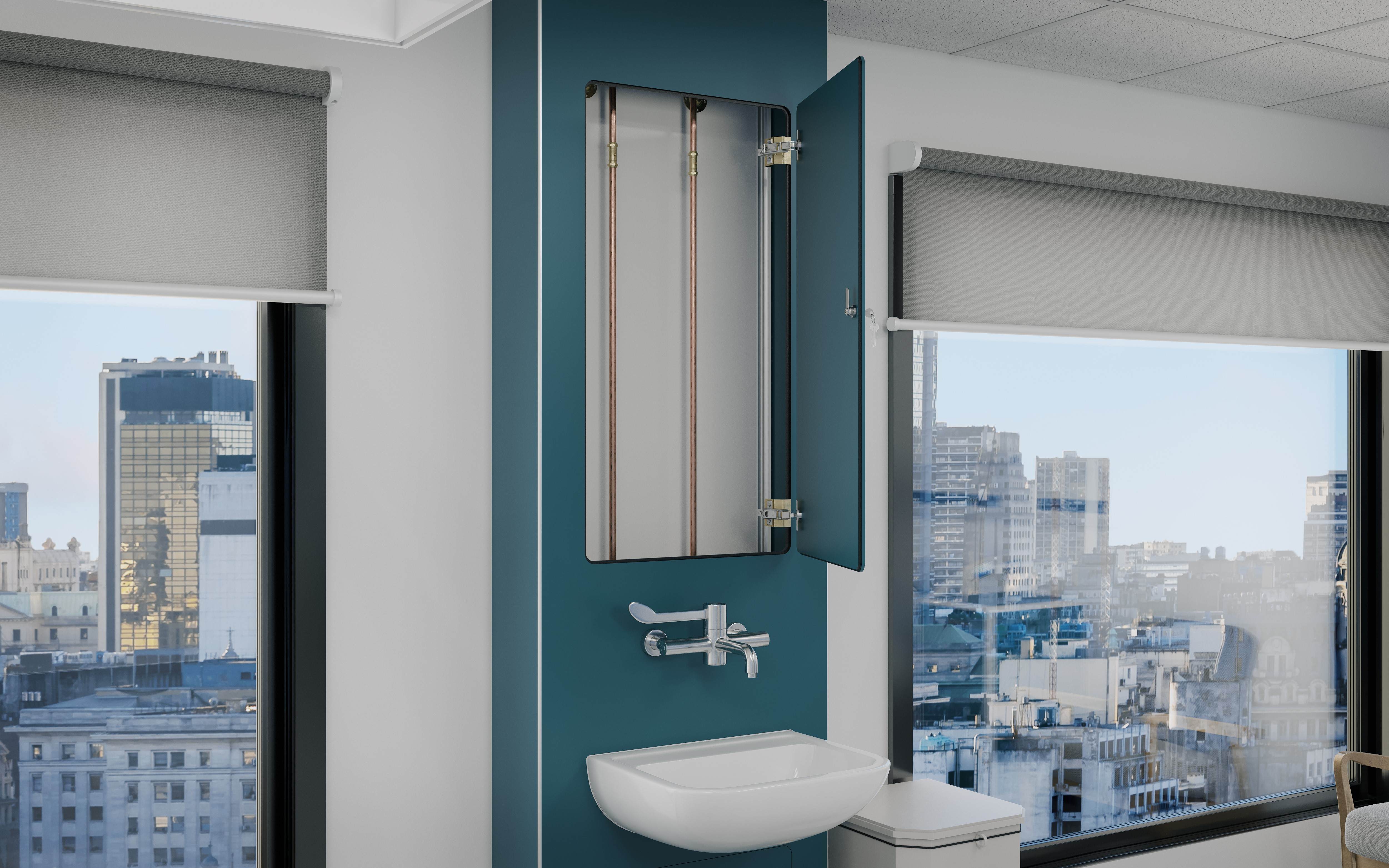
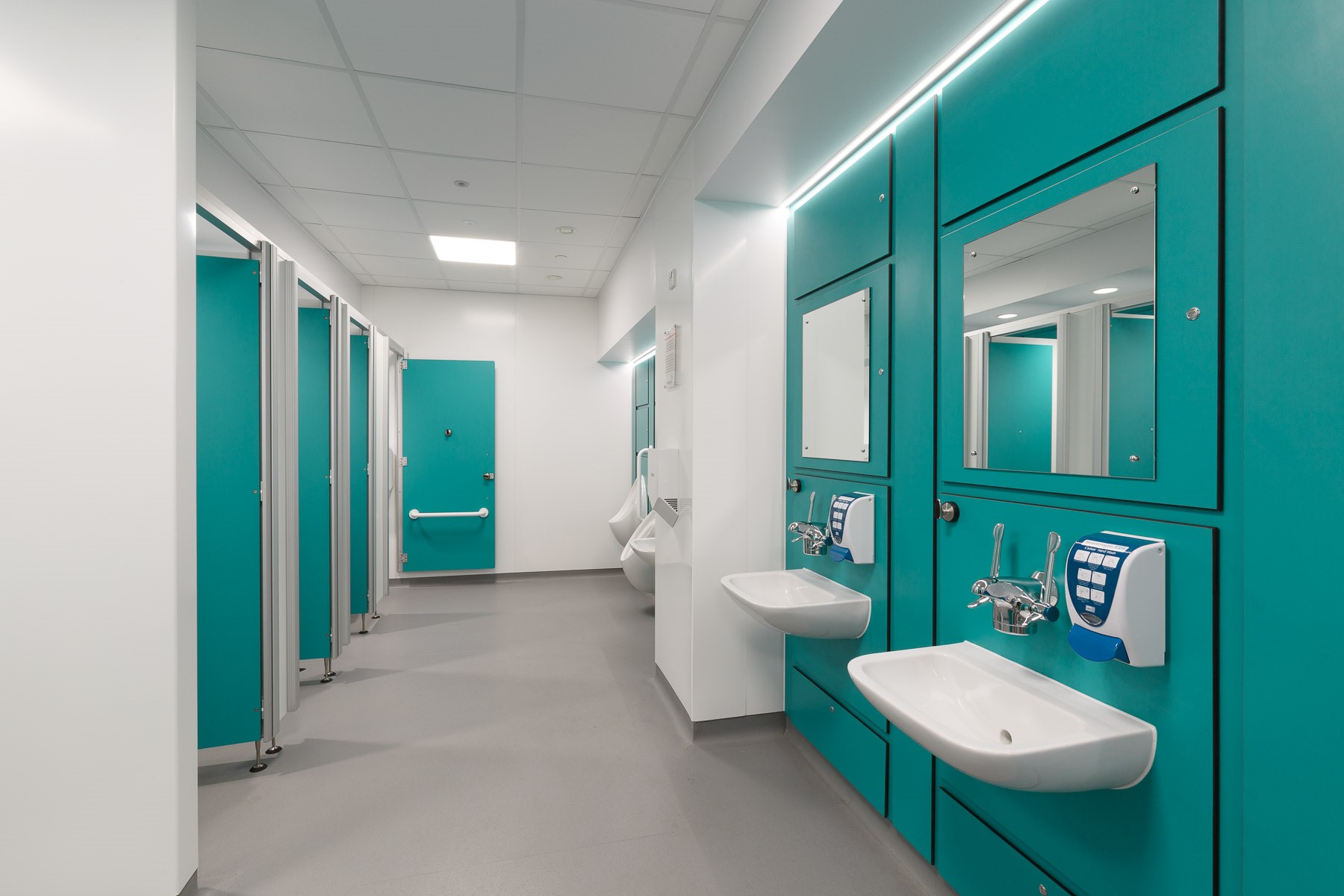
A key consideration is the management of services within washrooms and clinical sanitary spaces. Pipework, drainage, and sanitary assemblies should be concealed to reduce infection risk and support effective cleaning, while still allowing safe access for inspection and repair. IPS panelling systems are widely used to achieve this balance, providing smooth, sealed surfaces alongside secure access to services.
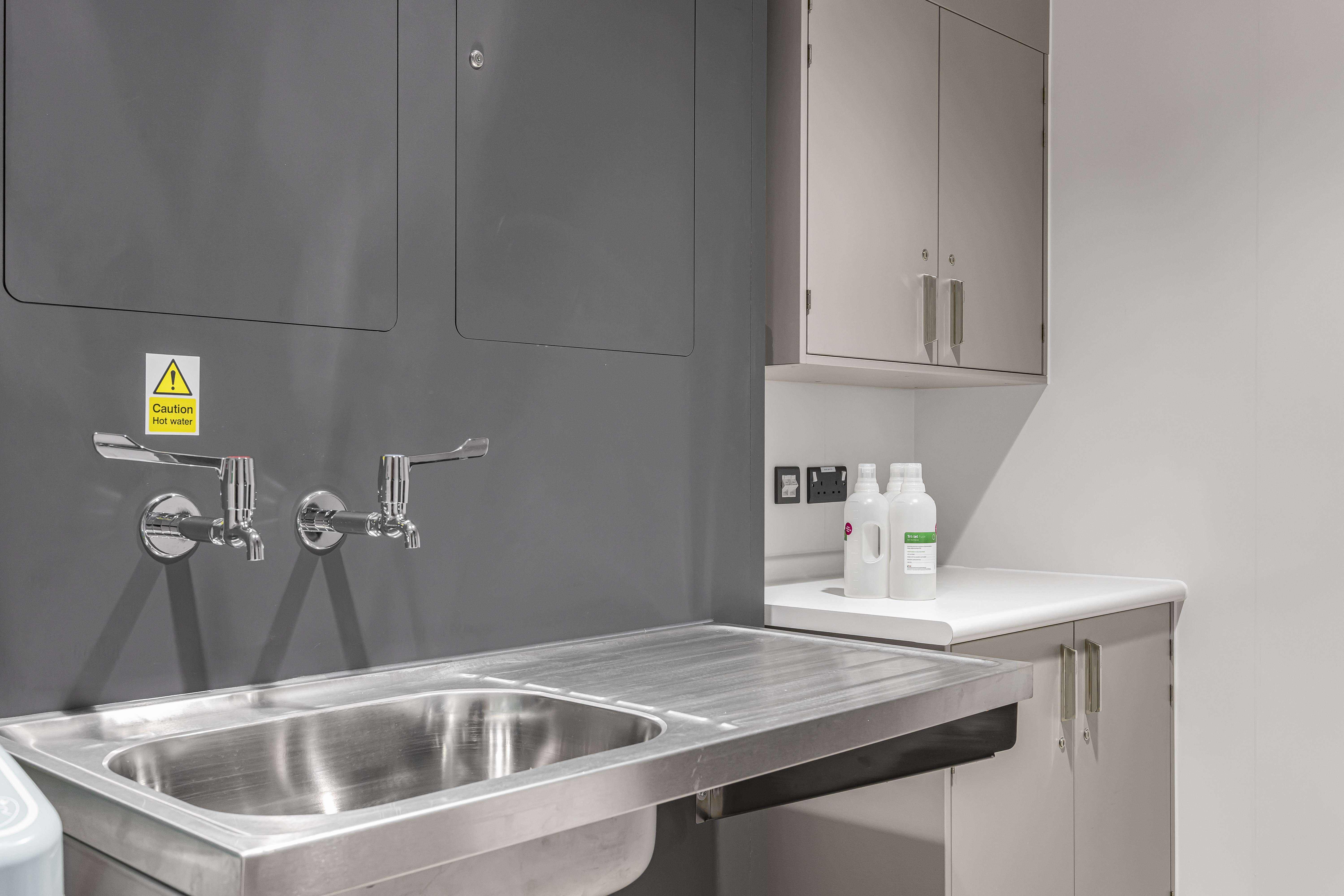
Material selection plays a critical role in performance. Healthcare washrooms are exposed to high moisture levels, regular cleaning with chemicals, and frequent impact. Surfaces must be impervious to water and resistant to damage over time. Materials such as Solid Grade Laminate, stainless steel, solid surface, and PVC are commonly specified because they are non-porous, durable, and easy to clean. Where timber-based boards are used, they must be appropriate for the environment and properly protected to prevent moisture ingress.
Supporting infection prevention and control
Infection prevention and control guidance places strong emphasis on cleanability and the reduction of dirt traps. Smooth surfaces, minimal joints, and concealed services help support effective cleaning regimes. Basin overflows are often avoided due to hygiene risks, while sensor-operated taps and flush controls can help reduce hand contact in clinical washrooms.
Designing for accessibility and inclusion
Accessibility is another essential requirement. Healthcare washrooms must provide suitable facilities for wheelchair users, ambulant disabled people, and other users with specific needs. Approved Document M and BS 8300 set out requirements for layout, activity space, and ease of use. Clear colour contrast between walls, doors, and floors supports users with visual impairments, while consistent layouts help users navigate spaces more easily.
Reducing maintenance and disruption
Maintenance must also be considered at specification stage. In live healthcare settings, repairs often need to be carried out quickly and safely, without disrupting patient care. IPS systems that incorporate hinged panels, secure locking mechanisms, and clear service zones allow estates teams to access services efficiently, reducing downtime and long-term maintenance costs.
Installation approaches for healthcare projects
Installation approach can further influence outcomes. Factory-manufactured IPS, cubicle systems, vanities, and sanitaryware assemblies can improve quality control, reduce reliance on site labour, and shorten installation times. This is particularly valuable in refurbishment projects, where work often takes place within occupied buildings.
The importance of early specification
Ross Houghton, Business Development Manager at Venesta, says early specification choices are critical.
“Healthcare washrooms need to perform safely every day. Careful consideration for compliance, hygiene, and maintenance from the outset helps reduce risk and supports long-term performance.”
For more information, or help with your specification visithttps://www.venesta.co.uk/products/help-me-choose/healthcare-1or contact 01474 353333.